Most sliding patio doors provide approximately 20 to 30 years of useful service when they are installed correctly and maintained regularly.
When homeowners ask How Long Should a Sliding Glass Door Last, we explain that the complete door may remain usable for decades even though rollers, weatherstripping, locks, and insulated-glass seals often require attention much sooner.
The following figures are practical inspection and replacement ranges rather than universal manufacturer specifications:
Component | Typical Planning Range | Common Reason for Early Failure |
Complete sliding door system | 20–30 years | Frame damage, poor installation, corrosion or outdated performance |
Glass door rollers | 5–10 years before possible service | Dirt, heavy panels, corrosion and poor adjustment |
Track or track cap | 10–20 years or longer | Impact damage, corrosion, worn surfaces and trapped debris |
Weatherstripping | 5–15 years | Sun exposure, friction, compression and tearing |
Insulated-glass seal | 10–20 years or longer | Seal deterioration, heat cycles, edge damage and moisture |
Lock and handle hardware | 7–15 years | Frequent use, misalignment and corrosion |
Exterior caulking | Inspect yearly | Cracking, movement, sunlight and weather exposure |
The ranges are vast. Clean tracks and proper alignment can help some rollers last longer, while heavy-used doors near rental properties, busy commercial areas, or beaches may require earlier service.
A door’s age alone does not determine its condition. We have repaired older doors that remained structurally sound and replaced much newer doors that had severe frame, water, or installation problems.
Unsuitable installation is often the cause of premature wear, rather than poor product quality.
Our experience has shown that early and regular adjustment and cleaning can save you a lot of money.
A difficult-to-move door may not require replacement. The frame and the glass of a patio door can be repaired to fix many common issues.
A dirty track, worn rollers, or poor adjustment can make a good door feel unusable. Manufacturer service guidance commonly recommends cleaning the track and checking or adjusting rollers when sliding operation becomes difficult.
A sliding door replacement makes sense when repairs cannot restore safe, efficient, and reliable operation at a reasonable long-term cost.
Decision | When It Makes Sense |
Clean and adjust | Door is structurally sound but feels rough or uneven |
Replace rollers | Panel is heavy, noisy or difficult to move |
Repair the track | Localized wear or damage prevents smooth movement |
Replace weatherstripping | Door operates correctly but allows drafts |
Replace lock or handle | Hardware is worn but the panel and frame are sound |
Replace insulated glass | Glass seal has failed but the door system is otherwise good |
Replace operating panel | Panel is damaged and a matching replacement is available |
Replace complete door | Frame, sill, efficiency or structural condition is poor |
Many homeowners fail to realize that the age factor should be taken in consideration along with the repair scope. While a door over 25 years old may only need rollers, it may still be worth fixing. However, if the door has been water damaged and is more than 12 years old, then you may need to replace it.
A professionally done sliding door installation is a big factor in whether the door panel is balanced properly and the frame is waterproof and airtight.
Expert installers are usually thorough in checking that the opening is level square straight up, flashed well, fastened firmly insulated sealed, and
Professional installers typically take extra time to level and secure the track, which significantly extends the door’s lifespan.
During many sliding door installations, we find that small alignment errors become much more noticeable after the heavy glass panel is installed.
Remove sand, hair, leaves, pet debris, and other particles before they become compacted around the rollers.
For frequently used doors, inspect the track every month and clean it whenever movement becomes rough.
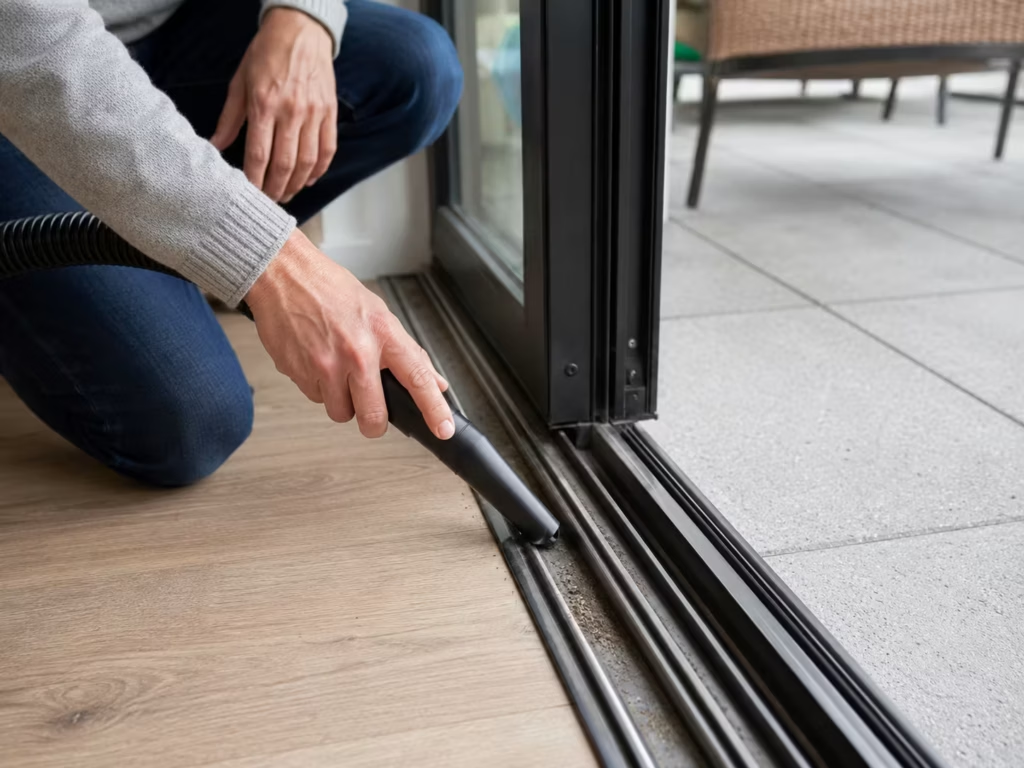
Then wipe down the track using a damp cloth and a mild cleaning solution that works with the particular material of the door.
Don’t allow water to stand in the track because this could become a breeding ground for fungus or mold.
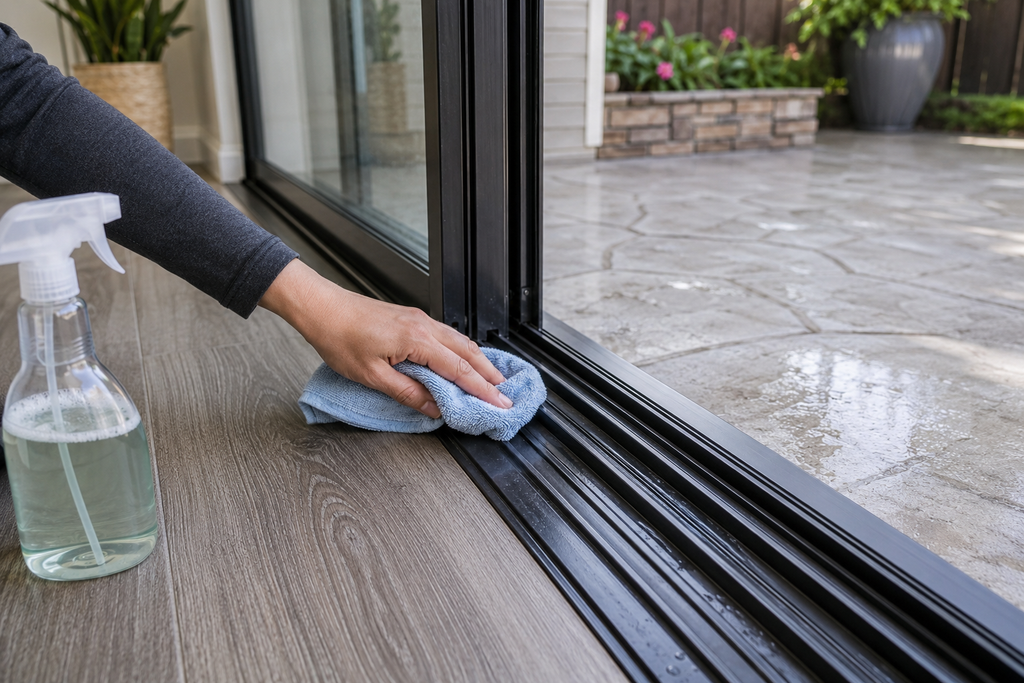
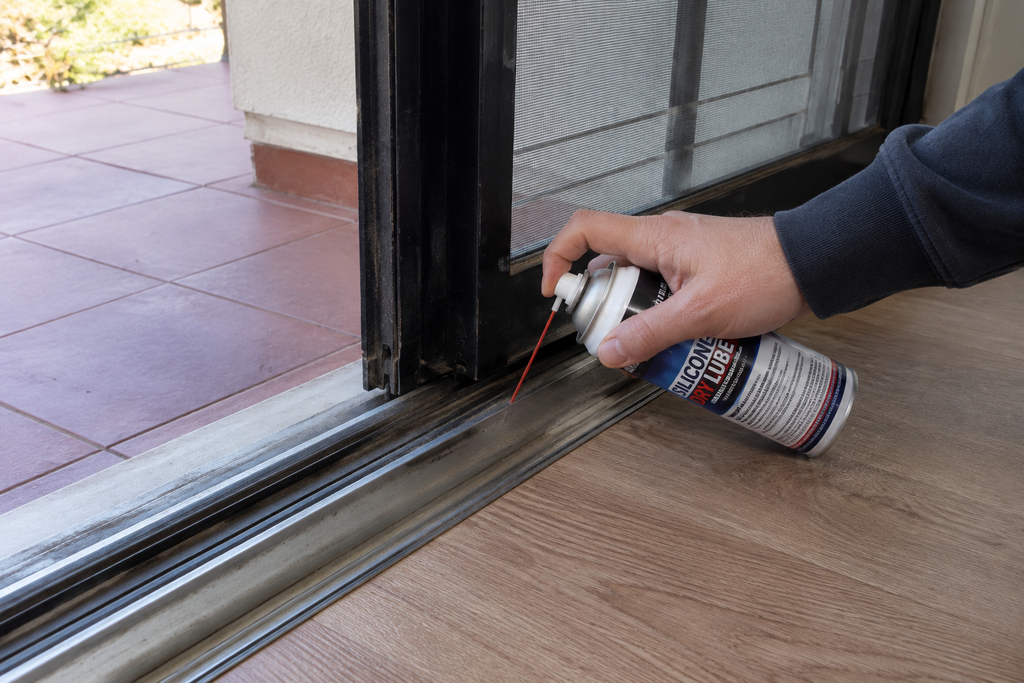
Follow the manufacturer’s instructions before applying lubricant.
A dry silicone or manufacturer-approved product is often preferable to heavy grease, which can collect dirt and create an abrasive paste.
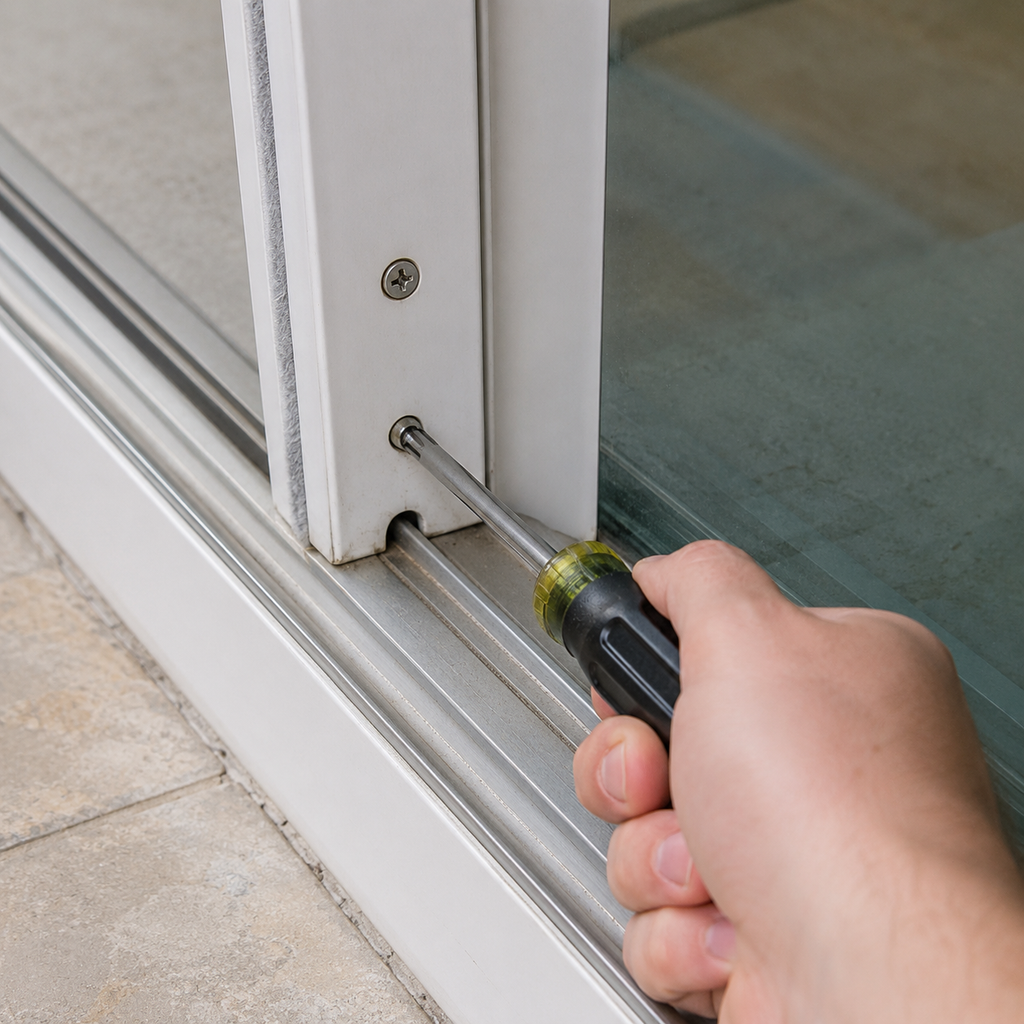
If the panel rubs, tilts, or no longer meets the frame evenly, the rollers may need adjustment.
Do not raise the panel excessively. Incorrect adjustment can affect the lock, weatherstripping, and top-panel engagement.
Look for flattened, torn, detached, or missing sections.
Replace damaged weatherstripping before air, water, and dirt begin entering the assembly.
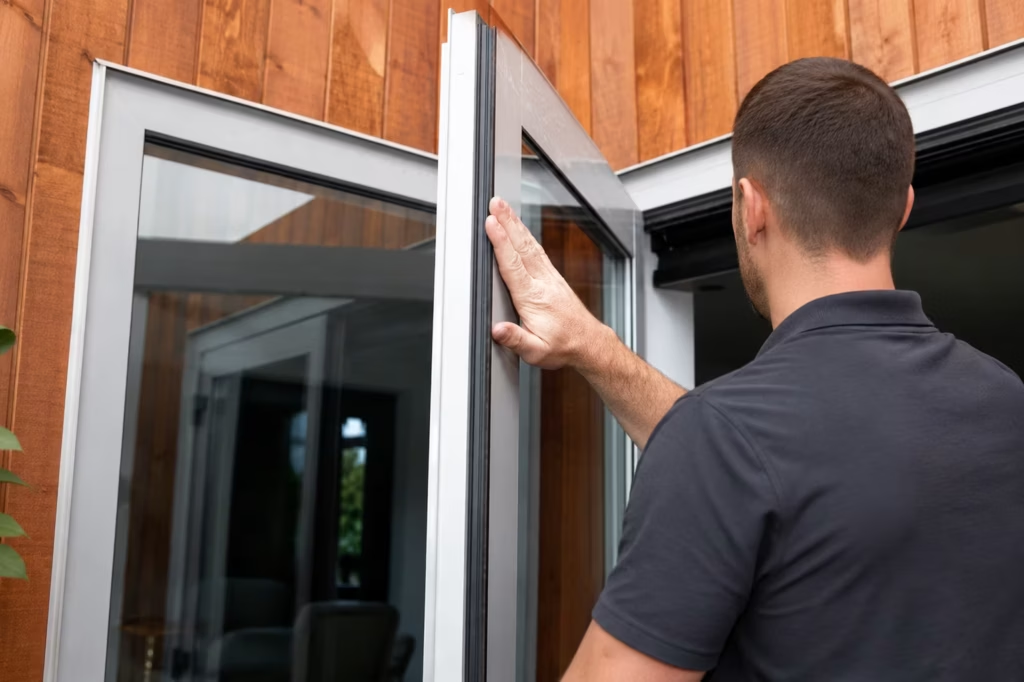
Confirm that the lock engages smoothly without lifting or pulling the panel.
A misaligned lock may indicate roller wear, frame movement, or incorrect keeper positioning.
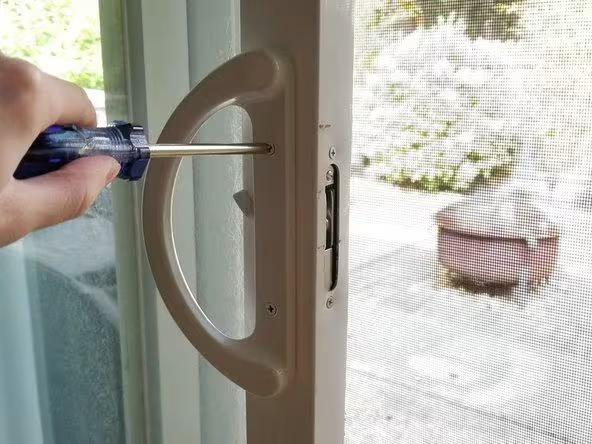
Service the door when it first becomes noisy or difficult.
Waiting until a roller collapses can damage the track and turn a straightforward repair into a larger project.
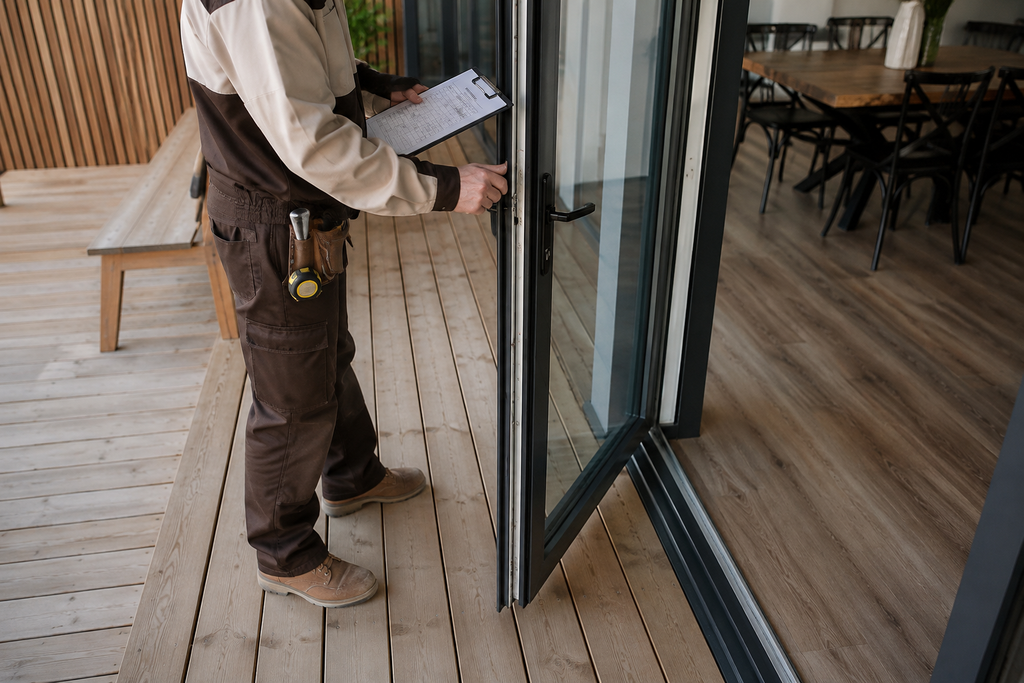
Interior sliding doors and exterior glass doors experience very different conditions.
Factor | Indoor Sliding Door | Exterior Sliding Glass Door |
Weather exposure | Minimal | Rain, sunlight, wind and temperature changes |
Insulated glass | Usually unnecessary | Commonly required |
Drainage system | Usually absent | Important at the sill |
Air sealing | Limited concern | Important for comfort and efficiency |
Corrosion risk | Generally low | Higher, especially near salt air |
Track contamination | Household dust | Dust, sand, leaves, water and insects |
Typical panel weight | Often lighter | Usually heavier |
Maintenance needs | Moderate | Higher |
Expected wear | Primarily mechanical | Mechanical plus environmental |
Interior doors may last longer because they avoid weather exposure, but lightweight hardware can still wear quickly under frequent use.
Exterior doors require more attention to seals, drainage, corrosion, insulated glass, and frame movement.
Understanding costs helps you decide between repair and replacement.
In our experience, repeated small repairs can eventually cost more than a full replacement.
Here’s what we’ve learned from years of fieldwork:
During many sliding door installations, we’ve seen that preventive maintenance always costs less than major repairs.
Most sliding doors will last 20-30 years, but rollers and weatherstripping may require attention sooner. Installation and maintenance quality are major factors in sliding door durability. Most operational problems are repairable before the need for a full sliding door replacement. Clean tracks, alignment and sealing are important. Early repairs and inspections of the whole components will help to prolong door life.
A typical sliding glass door lasts between 20 to 30 years with proper care and maintenance
Many times, the answer is yes. The replacement of the rollers can restore smooth operation in many cases if both track and frame are still in good condition.
Replacement is often the best solution when the frame is severely damaged. Insulated glass has failed or there is extensive corrosion. The overall condition of a door can help determine the most cost efficient long-term solution.
Yes. Most modern sliding doors are equipped with insulated glasses, Low E coatings, weatherstripping improvements, and better frames that improve the indoor comfort and reduce heat transfer.
Get personalized recommendations and professional installation support today.
Explore everything you need to know about sliding doors, from modern design ideas and space-saving solutions to installation tips, maintenance advice, materials, and the latest trends.
Fast, dependable patio door solutions with expert installation, lasting performance, and exceptional craftsmanship.
Choose your location service and explore Premuim sliding door repair & Installation options.